
I'm going to show you a simple electrical circuit and ask two questions about it. I want you to think about the similarities between solving these electronic problems and facing life's problems. Don't worry, getting the right answers to the electronic problems is not the point. Getting the right answers to life's problems is.
Here is the simple circuit, it has a battery connected to a switch, which is connected to a light. Closing the switch turns on the light. Turning on a light is a normal everyday event. The first question is, when the switch is closed, how much current will flow through the light? This is most certainly not an everyday question, but give it a try.
To solve this problem you need to know that the voltage
of the battery, symbolized with "V", is 10 Volts.
Also, the resistance "R" of the light is 100 Ohms.
The symbol for the current is "I".
To find the value of "I" you'll need to know the mathematical relationship
of the current to the voltage and resistance.
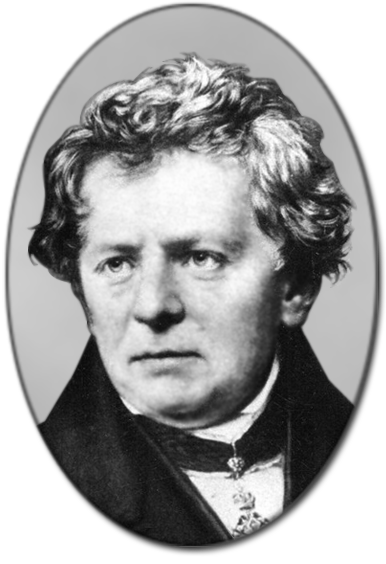
In 1827 Georg Simon Ohm discovered this relationship.
Use this equation to calculate how much current flows through the light and put your answer here:
Here is something about me, I like math. Not everyone does. I hope you had fun with this simple math problem. It's okay if you didn't get the right answer or even it you didn't try. Next, I want you to ponder this question. After closing the switch, how long does it take for the current to reach the light? Normally when we turn on a light, we expect it to come on immediately. Is that really the case? For the second electronic problem, the length of the wire connecting the switch to the light is 100 feet.
Unlike the first question, this is a much harder question. Like the first question, we need to relly on a smart person from history. Let's refer to the work of one of the greatest physicists and mathematician that has ever lived James Clerk Maxwell. Between 1860 and 1871 he developed a unifying theory of electricity, magnetism and light. Maxwell's equations today underpin all modern information and communication technologies including cell phones and WiFi.
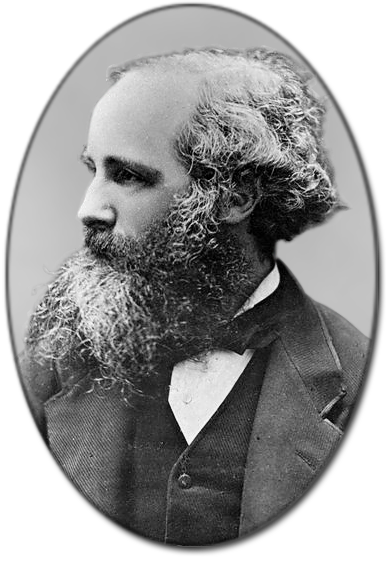
Maxwell was a genius in the same category as Albert Einstein.
Maxwell’s theory greatly influenced the understanding of the physical world
and helped lead to Albert Einstein’s special theory of relativity and
Max Planck’s quantum theory.
Knowing how smart Maxwell was may help us understand why we may be confused by his equations. There are very few people in the world that completely understand them. I'm certainly not one of those people.
I do know something about what the equations describe and how to use them. When electricity flows down a wire, it creates magnetic and electric fields around the wire. If you have a magnetic field, there must be a current. The magnetic and electric fields can travel down the wire. Maxwell's equations and his work determined that the fields would travel at the speed of light under the right conditions. That being, in a vacuum with the wires far apart. Since these are not normal conditions, the speed will be less. My experience has shown that in normal wire the speed is about two thirds the speed of light. You might ask, did I just derive this from Maxwell's equations? No, but it can be done. In college, I took a field theory class where I learned about field wave equations. So I know that it can be done.
Because of Maxwell's equations we know how fast the electric and magnetic fields travel down wires. Since the current is directly related to these fields, we know how fast the current travels down the wire. We can now relate the second electronic problem to one that we already know how to solve. If you are driving down the road how long will it take you to get were we are going.
$$time = { distance \over speed}$$I know what you are thinking, you would just use a Map App on your phone, and it would tell me how long. I understand that, and I would do the same thing. Using this equation, we can solve the current speed problem.
$${100 ft \over {2 \over 3} speed\_of\_light} = time$$ $${100 ft \over {2 \over 3} 983,571,056 {ft \over sec}} = 0.000000153 sec$$The answer is 0.000000153 seconds. That is a very, very small number. Another way of writing that number is 153 nanoseconds. A nanosecond is one billionth of a second. When I try to comprehend just how small that is, I start by trying to comprehend one thousandth of something. The thickness of a hair is about three thousandths of an inch, I can comprehend that. Thinking about something that is one thousandth of a hair or one millionth of an inch, that is harder. Comprehending one billionth of an inch is just too hard. Comprehending one billionth of a second is the same. The time it takes for the current to travel from the switch to the light is so small it is essentially instantaneous. For the most part it can be ignored.
A nanosecond is so small why would anyone care that it took 153 of them for anything to go anywhere. I worked for 10 years designing computer hardware. Computers work really fast and can get a lot done in a nanosecond. They can add, subtract or multiply numbers in less than a nanosecond. I would spend a lot of time redesigning hardware to save a nanosecond. The 153 nanoseconds that it takes current to travel down the wire in my contrived electronics problem is so small that it should be ignored. For a computer, waiting 153 nanoseconds for a signal to travel down a wire is a long time and better not be ignored. I worked my whole career doing computer engineering. I worked will nanoseconds, I discussed them, and argued about them. Do I really, completely understand how small they are?
There are other similar things in live where you may ask yourself, do I really understand it. Saying prayers may be an example of one of those things. You know how to say prayers. You know that it feels good to pray. Do you understand how prayer works? I don't. If I don't understand how it works, then why do I do it? That is a good question, one that everybody should ask themselves.
Let's go back to the incomprehensible nanosecond.
I have won arguments about them and lost arguments.
I have used my understanding of them to design and build computer systems
that work.
I have proven to myself that things can and do happen in nanoseconds.
Do I really completely understand them?
The evidence is, computer systems work, but do they?
In electronics, there can be metastability.
I talk to Heavenly Father, and he talks to me. Does he answer all my prayers? No. Does he give me everything I ask for? No. I know that He is there, and that he loves me. The best question to ask Him is, are you there? I have had Him answer this question so many times. I get this overwhelming felling of warmth, love, kindness, caring, and understanding. It reminds me of a warm blanket on a cold winter day. I'm left with a deep understanding that my Heavenly Father is there, He knows me, and cares about me. Do I understand how all this works and how it is possible? No. I do know that God is real, He is my Heavenly Father, and that he loves me.
I know that I have a Heavenly Father, is that enough? No, it is only the beginning. We used Ohm's Law and Maxwell's equations to solve electronic problems. These equations have helped me many times with my work. They are not as useful for life's problems. Who do we turn to for help with life's problems? Just like any loving father, our loving Heavenly Father wants the best for each of us. He wants us to improve and become better than we currently are. He wants us to reach our potential. He has given us Jesus Christ to be our example and show us the way to be happy. Jesus Christ is the one to refer to when we need help with life's problems. Jesus Christ's example, His teachings and His atoning sacrifice has made it possible for us to overcome our mistakes and become better people.
We used equations to solve the electronic problems, but we may not completely understand them or how they were derived. At least I don't. Can we trust in Jesus Christ when we don't completely understand how His atonement can possibly work? How can I trust that the equations would really solve electronic problems? Other people told me that the equations would work, so I tried them and they worked. After they worked, I started to trust or have faith in them. The more circuits I designed, the more faith I had. The same is true for the Gospel of Jesus Christ. The more I align my life with His teachings, the more faith I have in Him. I'm a member of The Church of Jesus Christ of Latter-day Saints. I have faith in Christ and His church.
Can we have faith in both science and God?
Brigham Young taught
"Every discovery in science and art,
that is really true and useful to mankind, has been given by direct revelation from God,
though but few acknowledge it."
Some people believe that there is a conflict between science and religion. I don't believe that. I believe that truth is truth wherever it comes from. Science is most concerned with how things work. Religion is concerned with our relationship to God and our relationships to other people. Science pursues truth to help us understand our world, so we can make it a better place, and can provide for our basic needs, food, water, shelter, communication, etc. Religion pursues truth to make us better people, and to help us be happy. I don't see a conflict.